
n a small or fragmented plot, the bottleneck is almost never the crop — it is the harvest window. A mini corn harvester is the smallest machine that can pull the ears, carry them out of the row and chop the stalks in a single pass. For growers who cannot justify a tractor-mounted combine, and for dealers who need a machine that actually sells in that segment, it is the practical middle ground between a hand crew and a full-size combine.
This guide covers what defines a mini corn harvester, how the Hans HS-4YZ-1 is built, which specification numbers decide whether the machine fits your field, and what drives the price at the factory gate.
Why Small Farms and Dealers Are Adding a Mini Corn Harvester
Maize is harvested on a scale that is easy to underestimate. USDA Foreign Agricultural Service corn area-harvested data puts China at roughly 45 million hectares, the United States at 36.9 million, Brazil at 22.8 million and India at 14.4 million. In China, India and much of South and Southeast Asia, most of that area is farmed in plots far too small for a combine to enter.
The pattern behind those numbers matters more than the numbers themselves: maize area keeps expanding, while the average plot size inside it does not. Mechanisation therefore has to get smaller and more specialised, not bigger.
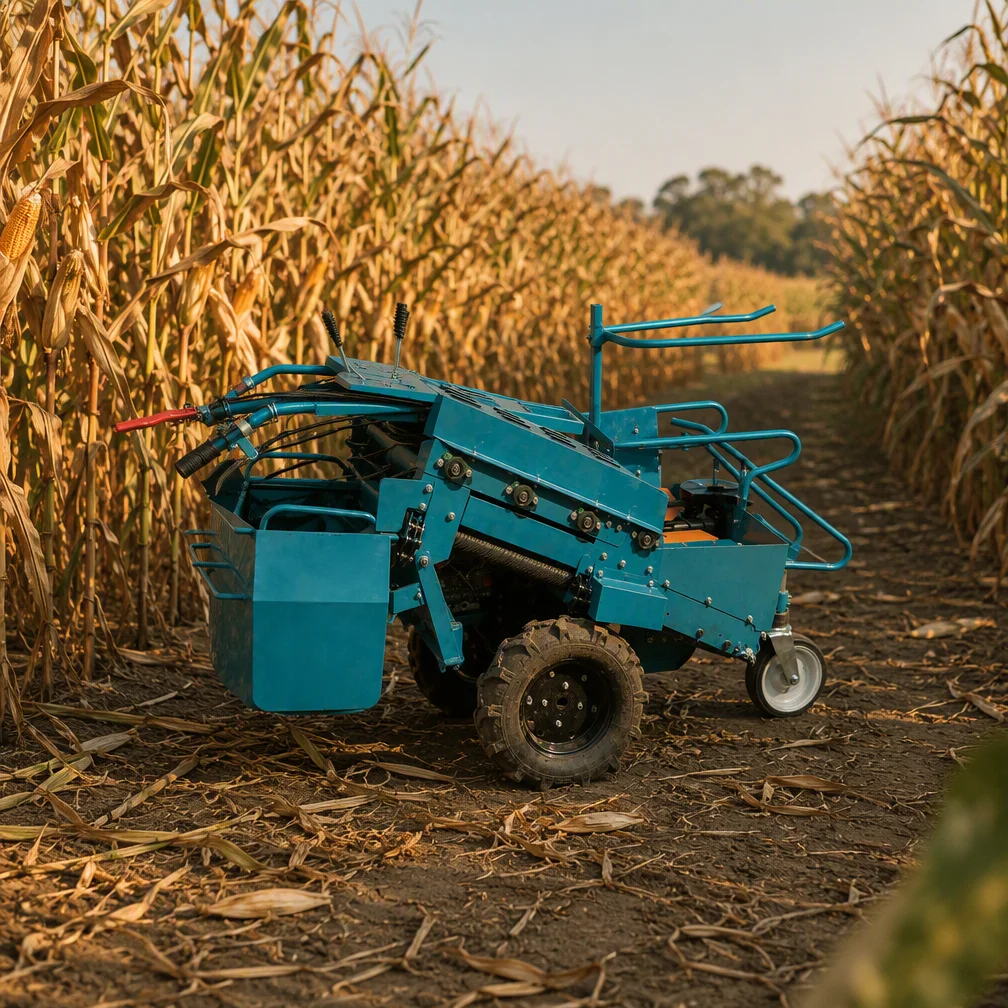
The economics are simple. Hand picking needs a large crew at exactly the moment labour is most expensive and least available, and the ears that stay in the field longest are the ones that lose quality. Mechanising the harvest shortens that peak, and shortening the peak is what protects both the crop and the margin.
What Actually Counts as a Mini Corn Harvester
“Mini” is not a marketing word — it describes a machine class. A mini corn harvester is a single-row, compact machine, usually walk-behind or light self-propelled, that can be driven into a plot a tractor cannot reach, turned around at the headland without three-point turns, and moved between fields on a small trailer.
Three machine families are often confused with each other, and they do different jobs:
- Corn reaper — cuts and lays the stalks down. Picking is still done by hand afterwards.
- Corn picker / mini corn harvester — pulls the ears off the standing stalk, collects them, and usually chops the residue. This is the family the HS-4YZ-1 belongs to.
- Corn combine — picks and threshes in one machine, producing loose grain. Heavier, wider and far more expensive.
If your market sells whole ears — fresh market, roasting, seed multiplication, or smallholder households that dry and store cobs — the picker family is the correct choice, because the ear arrives intact and the husk stays on. If you need loose kernels, a harvester plus a thresher is the usual combination, and we cover that pairing in our corn threshers and shellers range.
For a full technical walk-through of the wider category, including machines that thresh in the field, see how a corn combine harvester works.
Inside the Hans HS-4YZ-1: Specifications at a Glance
The HS-4YZ-1 is our 195 diesel, electric-start, direct-connect bagging model: a walk-behind four-wheel self-propelled machine built for one-row picking with bag-ready collection.
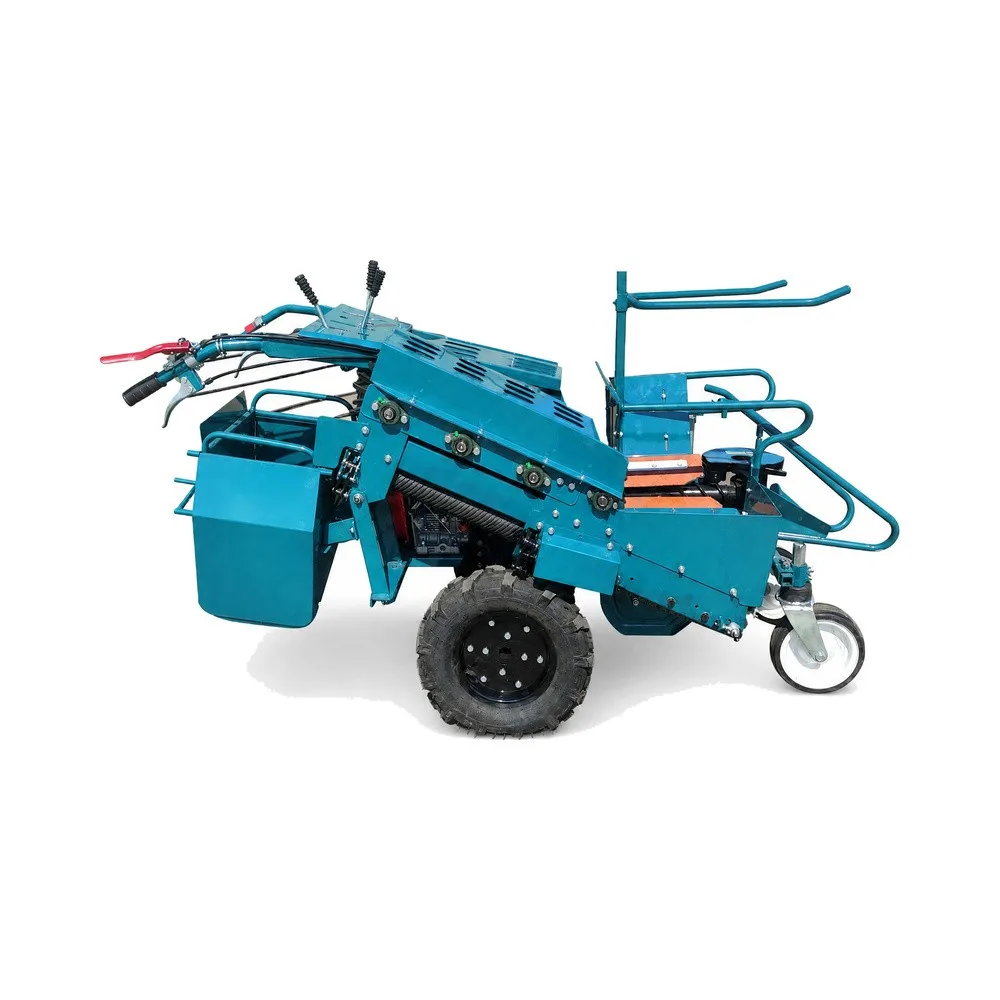
| Item | Specification |
|---|---|
| Model | HS-4YZ-1 |
| Construction type | Walk-behind, four-wheel, self-propelled |
| Engine | 195F diesel, electric start |
| Rated power | 9.2 kW / 12.3 hp |
| Overall dimensions | 2,200 × 950 × 1,200 mm |
| Structure mass | 280 kg |
| Transmission | Gear drive |
| Main clutch | Wet type |
| Steering | Built-in dual differential |
| Rows harvested | 1 row |
| Ear intact rate | ≥ 95% |
| Working speed | ≥ 0.3 m/s |
| Chopping blades | 12 blades, 80 mm each |
| Tyres (standard) | 400-8 solid |
| Tyres (optional) | 400-10 solid / 500-10 pneumatic |
| Packing size | 1,460 × 770 × 1,000 mm |
Every value above is a factory design figure, not a test-day best case. If you need the numbers in a different format for a tender or an import file, we will send them on letterhead.
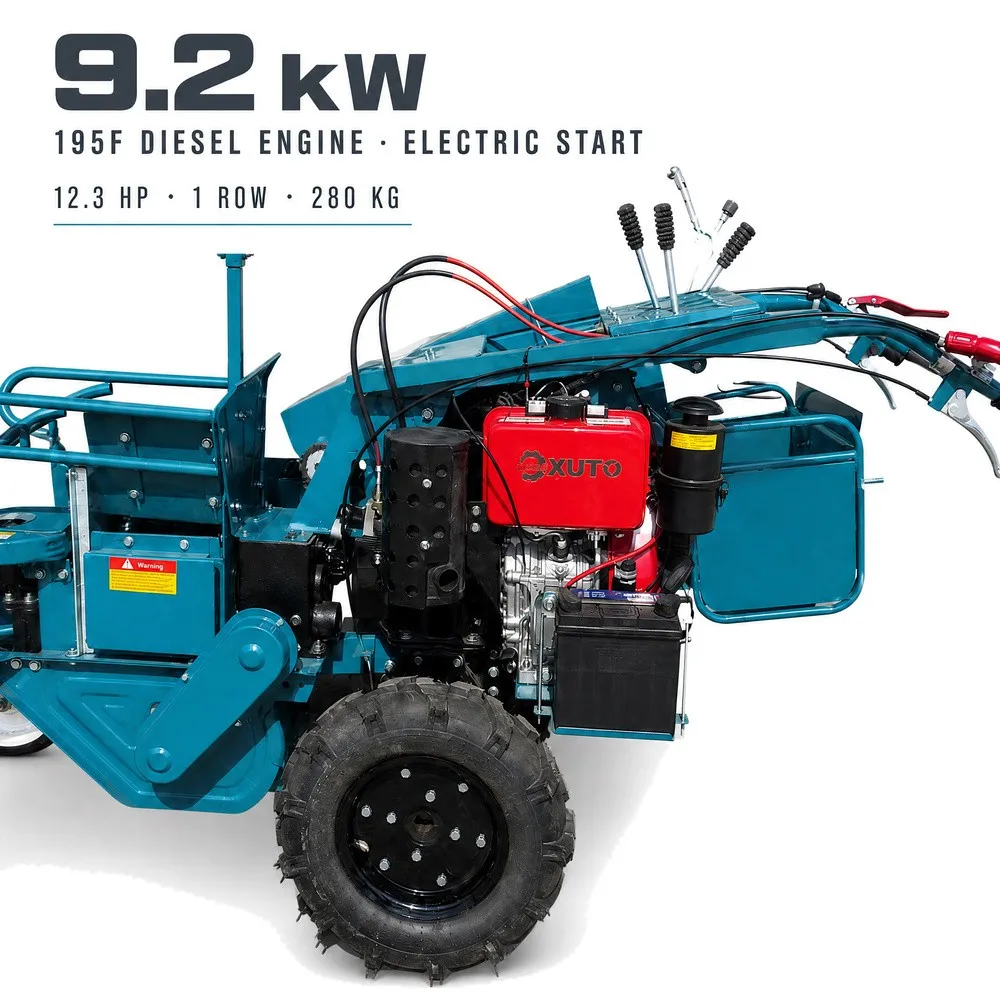
The 195F diesel is the reason this machine is specified the way it is. A single-cylinder diesel of this size produces its torque low in the rev range, which is what a picking header needs when the crop is dense or the ground is uneven.
Electric start matters more than it sounds. In a field, hand-cranking a cold diesel is a job nobody wants to repeat ten times a day — and on this machine it is one turn of a key.
Three Jobs in One Pass: Picking, Bagging and Straw Chopping
The HS-4YZ-1 does three operations in a single pass, which is what makes a one-row machine worth running at all:
- Picking. The rollers pull the ear from the stalk and guide it back into the machine.
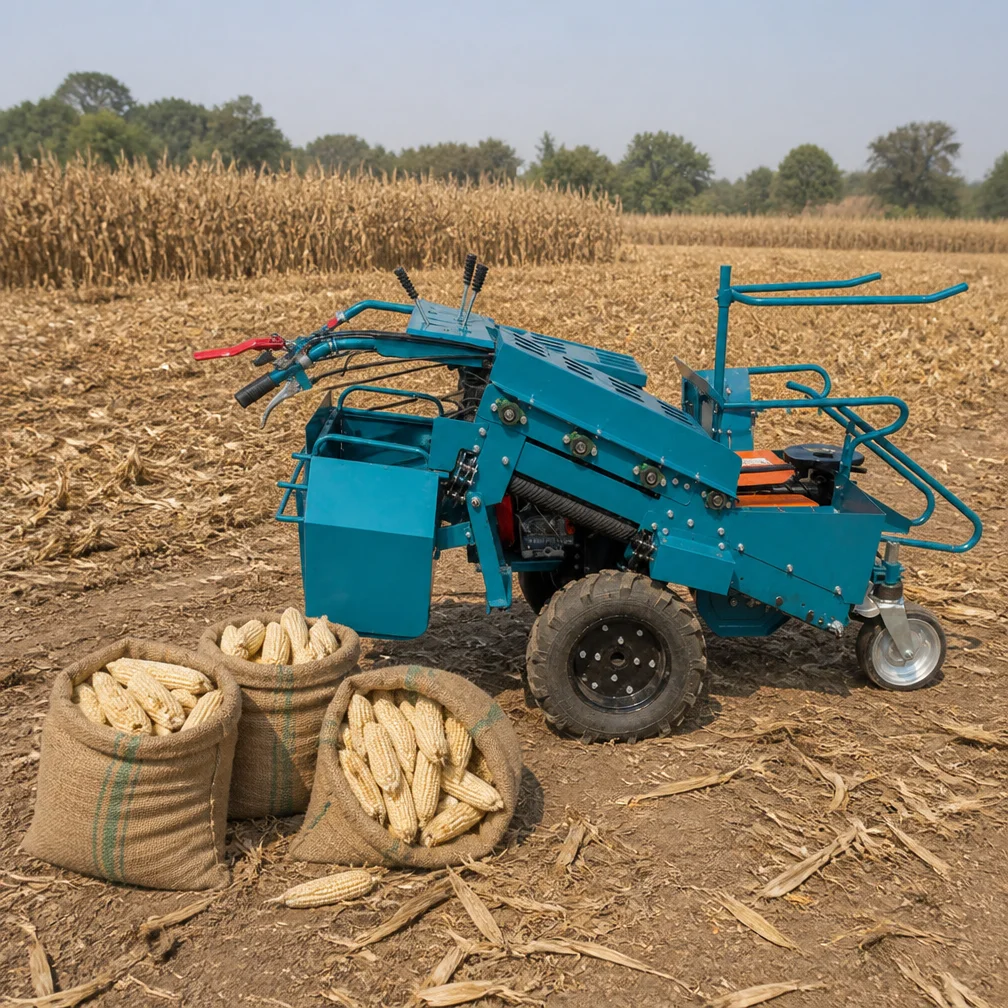
- Collection and bagging. A conveyor carries the picked ears straight into the collection box, which is designed to be bag-ready — the operator fills a sack at the machine instead of gathering cobs off the ground.
- Straw chopping and return. Twelve 80 mm blades chop the stalks and return them to the soil in the same pass, so the field is ready for the next operation instead of needing a separate residue pass.

Bagging at the machine is the detail that changes a workday. On a hand-picking crew, a large part of the labour is not picking at all — it is walking the rows to gather what was picked. On the HS-4YZ-1 that walking disappears: the ears come to the operator, and the sack is filled, tied and set aside while the machine keeps moving.
Steering and Headland Turns: Why the Differential Matters
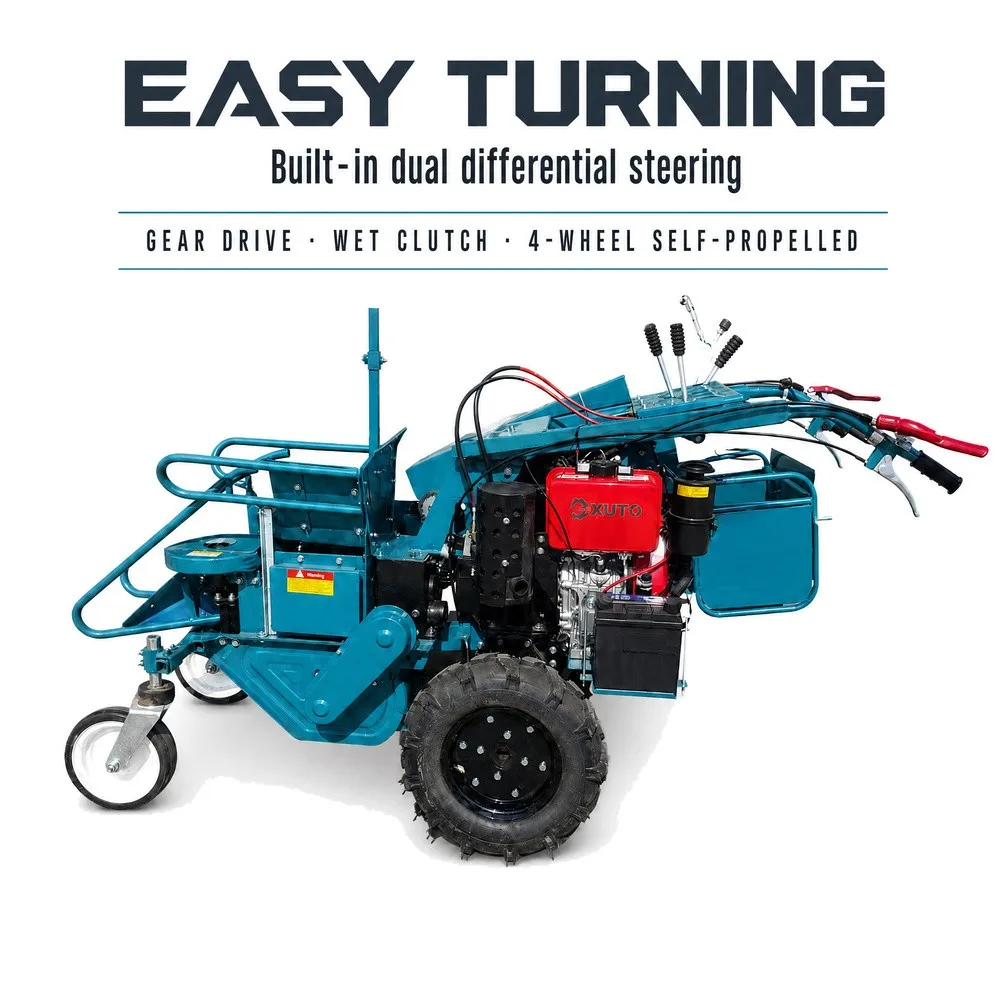
On a one-row machine, turning is not a detail — it is a large share of the total operating time, because a narrow field means a high number of headland turns per hectare. The HS-4YZ-1 uses built-in dual differential steering combined with a wet clutch and gear drive.
Dual differential steering lets the two sides of the machine rotate at different speeds, so the inner wheel slows instead of being dragged around a locked axle. The practical result is a tighter turning circle with less operator effort and less scrubbing of the soil surface at the headland.
The wet clutch is the other half of that story. It runs in an oil bath, so it tolerates the repeated engagement of start-and-stop headland work far better than a dry clutch, which is the component that fails first on a machine used this way.
Matching the Machine to Your Field
Before you order, five measurements decide whether a mini corn harvester is right for your farm or your dealership’s customer base:
- Row spacing and plant population. A one-row machine follows a single row. Measure the row spacing in the field the machine will actually work, not the average of the region.
- Flat or ridged planting. If the crop is planted on ridges or beds, choose the optional 500-10 pneumatic tyres — the larger footprint keeps the machine sitting on top of the bed instead of sinking into the furrow.
- Field shape and headland width. Small, terraced or irregular plots are exactly where this class of machine earns its price; long, wide fields are where a bigger machine starts to make sense.
- Ground conditions. Solid tyres resist punctures in heavy stubble; pneumatic tyres give more flotation on soft or recently irrigated ground. Both options are available on the same machine.
- Labour available. One operator is the normal crew. That single number is usually the strongest argument for a walk-behind machine over a hand crew.
What Drives the Price of a Mini Corn Harvester
Two mini corn harvesters with the same working width can differ substantially in price. The variables that move the number are:
- Engine and starting system — diesel with electric start against a smaller gasoline unit.
- Drive and clutch — gear drive with a wet clutch against a belt drive with a dry clutch.
- Steering system — dual differential against a simple locked axle.
- Collection method — bag-ready collection box against a plain hopper, or a separate trailer.
- Tyre specification — standard solid tyres against optional solid or pneumatic sizes.
- Order quantity, spare-parts package and packing — a container order with a stocked spare-parts kit is quoted differently from a single unit.
- Trade terms — FOB Qingdao against CIF to your port, plus whatever your customs regime adds at destination.
Because freight and configuration both enter the total, we quote per order rather than publishing a single number. Send your destination port, order quantity and tyre preference and you will get a quotation with the machine specification and the spare-parts list written out in full.
Harvest Quality and Loss: What to Check Before You Buy
Two numbers decide whether a harvest pays: how many ears arrive intact, and how much is left in the field. The HS-4YZ-1 carries a design ear intact rate of ≥ 95%, and the chopping blades work the residue in the same pass rather than leaving it for a second operation.
Post-harvest handling is where mechanisation pays twice: mechanised harvesting, threshing and handling cut both the labour peak and the losses that accumulate while a crop waits to be processed.
When you evaluate any mini corn harvester, ask for these three things and check them in a field trial, not on a specification sheet:
- Intact rate measured on a full pass, not a short demonstration strip.
- Ears left on the ground after a headland turn — the most common loss point on a one-row machine.
- Stubble and chopping quality, because it determines how soon the field can take the next operation.
Working With the Factory: Parts, Packing and Support
Every mini corn harvester we build, including the HS-4YZ-1, is produced through moulded-part manufacturing. That matters to importers for one reason: interchangeable parts. A machine built from moulded components is consistent unit to unit, so the spare that fits one machine fits the next one in the container.
For logistics and after-sales planning, the numbers to work with are the 280 kg structure mass and the 1,460 × 770 × 1,000 mm packing size per unit. Send us your container type and we will return a loading plan; send your typical failure points and we will recommend the spare-parts kit to hold on the shelf. Read more about our factory and production setup.
Warranty and spare-parts terms are confirmed in writing on the quotation, so there is no ambiguity after the order is placed. Machines ship from Qingdao, and we support dealers with documentation, specification sheets and parts lists for their own market.
Frequently Asked Questions
How does a mini corn harvester work?
Rollers pull the ear from the standing stalk, a conveyor carries the ears into a collection box, and blades chop the stalks and return them to the soil. One pass does the picking, the collection and the residue work.
Is a mini corn harvester better than picking by hand?
On labour, yes — one operator replaces a picking crew, and the ears are sacked at the machine instead of being gathered off the ground. On plot size, it is the only mechanised option for many small and terraced fields, because larger machines physically cannot enter them.
Does it shell the kernels?
No. The HS-4YZ-1 picks whole ears with the husk on, which is what fresh-market, roasting and seed growers need. If you need loose kernels, pair it with a thresher from our corn threshers and shellers range.
Can it work on ridged or hilly land?
Yes. Ridged or bed-planted fields can be handled with the optional 500-10 pneumatic tyres, and the compact 950 mm width with a tight turning circle is what makes small, sloping and irregular plots workable.
How many rows does it harvest?
One row. That is deliberate: a single-row machine is narrow enough to follow a row a combine cannot, and it keeps the machine at 280 kg and 2,200 mm long, which is what allows it to be moved on a small trailer.
What is the price of a mini corn harvester?
It depends on engine, drive, steering, collection method, tyre choice, order quantity and trade terms. Send your destination port and required configuration, and we will quote the machine and the spare-parts list together.
Next Step
If you are a grower, send us your row spacing, plot size and ground conditions, and we will tell you honestly whether a mini corn harvester or a larger machine is the better fit. If you are a dealer or importer, send your target market, order quantity and destination port instead.
Either way, you will get a configuration recommendation, a specification sheet and a quotation — usually within one working day.
Qingdao Hans Machinery Technology Co., Ltd.
Email: April@hansagriculture.com
WhatsApp: +86 187 6590 0085
Facebook: facebook.com/captainharvestermachine